

If you’ve ever stared at a blank content calendar wondering what to post, or felt like your brand’s message is all over the place, you’re not alone. Many creators and businesses start producing content reactively—following trends or inspiration—but this often leads to inconsistency and burnout.
Content pillars can change that. They give your content strategy a clear backbone, helping you plan ahead, stay consistent, and create posts that actually matter to your audience.
In this guide, we’ll explore what content pillars are, how to choose them, and how to use them to grow your brand online. By the end, you’ll have a simple, actionable framework to create consistent, engaging content across all your channels.
Understanding Content Pillars and Why They Matter
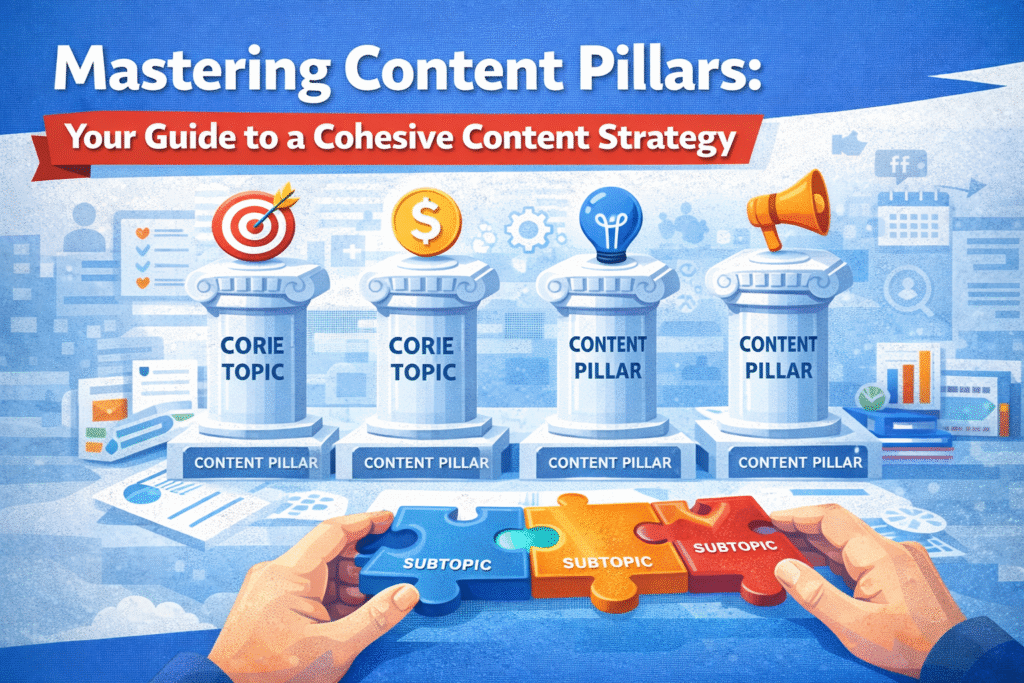
Content pillars are basically the main themes or topics that form the foundation of your content strategy. Think of them as the big ideas that guide everything you post—whether it’s a blog, social media update, video, or email.
Why they matter:
- Clarity: You always know what to post and why.
- Consistency: Your audience sees a clear, reliable message across platforms.
- Authority: Focusing on key themes positions you as an expert in your niche.
- Efficiency: Planning becomes easier, and content creation feels less chaotic.
For example:
- A wellness brand might focus on: Nutrition, Mindfulness, Workouts, and Mental Health.
- A marketing agency could choose: SEO, Social Media Strategy, Branding, and Analytics.
- A lifestyle influencer might post around: Travel, Fashion, Personal Growth, and Entrepreneurship.
Each post you create should tie back to at least one of your pillars. This approach makes your content recognizable, purposeful, and engaging.

How to Identify the Right Content Pillars for Your Brand
Choosing the right content pillars is about finding the balance between what your audience cares about and what aligns with your brand goals.
Here’s a simple process:
- Start with your brand mission: What do you want your audience to learn, feel, or achieve? Your mission guides your pillars.
- Understand your audience: Use surveys, feedback, or analytics to find out what topics interest them most.
- Pick 3–5 core themes: Too many pillars can dilute your focus. Choose broad topics that cover your niche well.
- Create supporting subtopics: Break each pillar into smaller ideas for blogs, posts, or videos.
- Match content formats: Decide whether each pillar works best as blogs, videos, infographics, or social media posts.
Example Table of Pillars by Industry:
| Industry | Example Pillars | Purpose | Best Formats |
| Wellness | Nutrition, Mindset, Workouts | Build trust & expertise | Blogs, Instagram, YouTube |
| Marketing | SEO, Branding, Social Media Strategy | Position as authority | LinkedIn Articles, Webinars |
| Travel | Destinations, Culture, Travel Tips | Inspire engagement | Pinterest, Blog, Reels |
| E-commerce | Product Guides, Reviews, Lifestyle | Drive sales | Videos, Reels, Emails |
By following this approach, you ensure your content is focused, relevant, and easier to plan ahead, instead of posting randomly.
Building a Strong Content Pillar Framework
Once you’ve chosen your content pillars, the next step is organizing them into a simple framework. A content pillar framework is what turns ideas into a repeatable system you can rely on week after week.
A strong framework usually includes:
- Core pillars: Your main themes (3–5 topics).
- Supporting subtopics: Smaller ideas that sit under each pillar.
- Content formats: Blogs, social posts, videos, emails, or reels.
- Posting rhythm: How often each pillar appears in your schedule.
- Performance tracking: Metrics like engagement, clicks, or conversions.
For example, if one of your pillars is SEO, your subtopics might include keyword research, on-page optimization, and ranking tips. Those ideas can then be shared as blog posts, short social updates, or quick explainer videos.
The goal isn’t to post more—it’s to post with intention. When your framework is clear, content planning feels lighter, more creative, and far less overwhelming.
Step-by-Step Guide to Creating Scalable Content Pillars
Creating content pillars doesn’t need to be complicated. You just need a clear process that you can repeat and scale over time.
Here’s a step-by-step way to do it:
- Define your purpose
Ask yourself why you create content. Is it to educate, inspire, sell, or build trust? Your answer becomes the foundation of your pillars. - List audience pain points
What questions do people keep asking? What problems are they trying to solve? Your content should help them move forward. - Choose 3–5 main pillars
These should be broad enough to create lots of content, but focused enough to stay relevant. - Break each pillar into ideas
Each pillar can support dozens of posts. One topic can easily turn into blogs, reels, carousels, or emails. - Decide how you’ll publish
Choose formats that suit both your audience and your strengths. Don’t force every platform—start small and grow. - Review and improve regularly
Look at what’s working and adjust your pillars over time. Content strategy should evolve with your audience.
Simple framework overview:
| Step | Focus Area | Outcome |
| 1 | Purpose & mission | Clear direction |
| 2 | Audience needs | Relevant content ideas |
| 3 | Pillar selection | Strong content foundation |
| 4 | Subtopics & formats | Scalable content planning |
| 5 | Review & optimize | Consistent growth |
This approach helps you publish consistently without burning out, while keeping your message clear and aligned with your goals.
The Benefits of Using Content Pillars for SEO and Consistency
Content pillars don’t just help you stay organized—they also strengthen your brand and improve your visibility in search engines. When your content revolves around clear themes, both your audience and Google understand what your brand stands for.
Stronger Content Consistency
When you work with defined pillars, planning becomes much easier. You don’t waste time thinking about random ideas because you already know which topics to focus on. This helps you maintain a steady posting schedule without feeling overwhelmed.
Builds Authority and Trust
Posting regularly about specific topics positions you as a reliable source of information. Over time, your audience begins to see your brand as knowledgeable and trustworthy within your niche.
Improves SEO Performance
Search engines favor websites that show expertise in a particular subject. When you create multiple pieces of content around one pillar, you build strong topical relevance. This increases your chances of ranking higher in search results.
Makes Content Repurposing Easier
One pillar topic can be turned into multiple types of content. For example, a blog post can become social media tips, short videos, or email newsletters. This saves time while expanding your reach.
Creates a Clear Brand Message
Content pillars help your audience quickly understand what your brand focuses on. This clarity strengthens brand recognition and keeps your messaging consistent across platforms.

Applying Content Pillars to Social Media Successfully
Social media works best when your message is clear and consistent. Content pillars help you avoid random posting and create a balanced mix of posts that your audience can easily recognize and enjoy.
Instead of sharing the same type of content every day, you can rotate your pillars throughout the week. This keeps your feed fresh while staying aligned with your brand voice.
How content pillars work across platforms:
- Instagram: Rotate pillars using reels, carousels, and stories for variety.
- LinkedIn: Share educational or thought-leadership content from one pillar at a time.
- TikTok: Turn pillar topics into short, engaging videos or quick tips.
- Pinterest: Create boards that match each content pillar theme.
Common content types within each pillar:
- Educational: Tips, tutorials, and how-to posts
- Inspirational: Quotes, personal stories, success moments
- Community-focused: Q&A sessions, behind-the-scenes content
- Promotional: Services, launches, and case studies
- Personal: Experiences, lessons, and reflections
When you plan content this way, your audience knows what to expect—and that familiarity builds trust and engagement over time.
Content Pillars vs Content Clusters: How They Work Together
Content pillars and content clusters often get mixed up, but they serve different purposes—and they work best when used together.
Think of content pillars as the main topics you’re known for. Content clusters are the detailed pieces that support those topics. One gives structure, the other adds depth.
For example:
- Content pillar: Content Marketing
- Content clusters: How to create a content calendar, blog writing tips, content distribution strategies
The pillar sets the theme, while the clusters answer specific questions around it. This makes your content more useful for readers and easier for search engines to understand.
Why this matters for SEO
When your pillar page links to related cluster content—and those clusters link back—you create a strong internal linking system. This helps search engines see your site as an authority on the topic, which can improve rankings over time.
Quick comparison:
| Content Pillars | Content Clusters |
| Broad topics | Specific subtopics |
| Evergreen themes | Detailed, focused content |
| Organize your strategy | Expand topic depth |
| Guide content planning | Support SEO and engagement |
Using both together creates a well-structured content system that grows with your brand instead of becoming messy over time.

Tips for Maintaining an Effective Pillar and Cluster System
Creating content pillars is just the beginning. To keep your strategy effective, you need to maintain and refine it over time. A little consistency and review can go a long way.
Simple tips to stay on track:
- Review performance regularly: Check which pillars get the most engagement, traffic, or conversions. Focus more on what works.
- Update older content: Refresh outdated posts so they continue to perform well in search results.
- Keep internal links strong: Connect cluster content back to its main pillar to improve structure and SEO.
- Avoid adding too many pillars: Stick to your core topics to prevent confusion or dilution.
- Adapt as your audience grows: Interests change, and your pillars should evolve with them.
A well-maintained system saves time, reduces stress, and keeps your content aligned with both your audience and business goals.
Why Content Pillars Create Long-Term Content Success
Content creation doesn’t have to feel chaotic or exhausting. When you build your strategy around clear content pillars, everything becomes more intentional. You stop guessing what to post and start creating content that actually supports your goals—something many brands achieve with structured guidance from teams like Alphatech.
Content pillars help you stay consistent without losing creativity. They give your brand a clear voice, make planning easier, and allow your audience to quickly understand what you stand for. Over time, this clarity builds trust, improves engagement, and strengthens your presence across search engines and social platforms.
Whether you’re a creator, small business, or growing brand, content pillars give you a foundation that supports long-term growth—one thoughtful piece of content at a time.
FAQ’s
1. What are content pillars in simple terms?
Content pillars are the main topics your brand focuses on. Every piece of content you create connects back to one of these topics to keep your message consistent and clear.
2. Do content pillars help with SEO?
Yes. Content pillars help search engines understand your expertise by grouping related content together, which can improve rankings and visibility over time.
3. Can content pillars change over time?
Absolutely. As your audience grows and your goals evolve, you can adjust or refine your pillars to stay relevant.
4. Are content pillars only for blogs?
No. Content pillars can be used for blogs, social media, videos, emails, and even podcasts. They support your entire content ecosystem.
5. What’s the difference between content pillars and content clusters?
Content pillars are broad topics, while content clusters are detailed pieces related to those topics. Together, they create a strong and organized content structure.