

Search Engine Optimization (SEO) is one of the most important factors behind ranking a website on Google. But SEO is not a single task — it’s a combination of multiple strategies that help search engines understand, trust, and rank your website correctly. That’s why SEO is broadly divided into on-page SEO and off-page SEO.
If you’ve ever wondered why some websites rank higher even with similar content, the answer usually lies in how well they balance SEO on page and off page efforts. On-page SEO focuses on optimizing everything inside your website, while off-page SEO is about building authority and trust outside your website.
Many beginners make the mistake of focusing only on backlinks or only on content. In reality, Google uses hundreds of ranking signals, and both on-page and off-page SEO play a critical role in how search engines evaluate your site
What Is On-Page SEO?
On-page SEO refers to the process of optimizing individual web pages so that search engines can easily understand the content, context, and relevance of a page. In simple terms, when someone asks “what is on page SEO?”, the answer is: it’s everything you do on your website to improve rankings in organic search results.
This includes optimizing content, HTML elements, page structure, and user experience. Unlike off-page SEO, on-page SEO is fully under your control, which makes it the first and most important step in any SEO strategy.
Search engines like Google analyze on-page SEO signals to decide:
- What your page is about
- Which keywords it should rank for
- Whether the content satisfies user search intent
If your on-page SEO is weak, even the strongest backlinks may not help your page rank.
Why On-Page SEO Matters for Google Rankings
Google’s main goal is to provide users with the most relevant and useful results. On-page SEO helps Google achieve that goal by clearly explaining your content through structured signals.
Strong on-page optimization helps you:
- Rank for relevant long-tail keywords
- Improve crawlability and indexing
- Reduce bounce rate and increase dwell time
- Build topical authority in your niche
For new or low-authority websites, on-page SEO is especially important because it allows you to compete without relying heavily on backlinks.
How Search Engines Understand On-Page SEO
Search engines don’t “read” content like humans. They rely on on-page SEO factors to interpret meaning. These include:
- Keywords and related terms used naturally in content
- HTML elements like title tags, meta descriptions, and headers
- Internal links that show content relationships
- User experience signals such as page speed and mobile usability
When these elements are optimized correctly, your website becomes easier to crawl, easier to index, and easier to rank.
What Is Included in On-Page SEO?
On-page SEO covers both content optimization and technical page-level elements, such as:
- Keyword research and placement
- Content quality and search intent alignment
- Header tag structure (H1, H2, H3)
- Image optimization with alt text
- Internal linking strategy
- URL structure and readability
All these elements work together to send strong relevance signals to Google.
Core On-Page SEO Factors That Impact Rankings
Understanding on-page SEO factors is essential if you want your content to rank consistently on Google. These factors help search engines evaluate relevance, quality, and user experience at the page level. When optimized correctly, they significantly improve your chances of ranking—even in competitive niches.
Below are the most important on-page SEO factors you should focus on.
Title Tags & Meta Descriptions
The title tag is one of the strongest on-page SEO signals. It tells search engines what your page is about and directly impacts click-through rates (CTR).
Best practices:
- Include your primary keyword naturally
- Keep titles under 60 characters
- Make them clear and compelling
Meta descriptions don’t directly affect rankings, but they influence user clicks, which indirectly supports SEO performance.
Header Tags (H1, H2, H3…)
Header tags help structure your content and improve readability for both users and search engines.
- H1: Should include the main topic of the page
- H2 & H3: Used for subtopics and semantic variations
- Avoid keyword stuffing—use related terms naturally
Proper heading structure helps Google understand content hierarchy and topical relevance.
URL Structure & Readability
SEO-friendly URLs improve crawlability and user trust.
Good URL structure:
- Short and descriptive
- Uses hyphens instead of underscores
- Includes the main keyword
Example:
/on-page-vs-off-page-seo-guide/
Clean URLs are easier for search engines to index and users to remember.
Content Quality & Search Intent
High-quality content is the foundation of on-page SEO. Google evaluates content based on:
- Relevance to the search query
- Depth and usefulness
- Alignment with user intent (informational, commercial, navigational)
To improve rankings, your content should fully answer the user’s question, not just repeat keywords.
Image Optimization & Alt Text
Images enhance user experience, but unoptimized images can slow down your site.
Key image optimization tips:
- Compress images to improve page speed
- Use descriptive file names
- Add keyword-relevant alt text for accessibility and image search
Optimized images support both SEO and usability.
Internal Linking Strategy
Internal links help search engines discover new pages and understand relationships between content.
Benefits of internal linking:
- Distributes link equity
- Improves crawl depth
- Keeps users engaged longer
Use descriptive anchor text and link to relevant pages naturally.
Page Speed & Core Web Vitals
Google considers page speed and user experience metrics as ranking factors.
Important elements include:
- Fast loading time
- Mobile responsiveness
- Stable layout (no unexpected shifts)
Improving page speed reduces bounce rates and improves overall SEO performance.
Mobile-Friendliness
With mobile-first indexing, Google primarily evaluates the mobile version of your site.
Ensure:
- Responsive design
- Readable fonts
- Easy navigation on small screens
A mobile-friendly site is no longer optional—it’s essential.
On-Page SEO Checklist (Beginner-Friendly)
An on-page SEO checklist helps ensure that every page on your website is fully optimized before publishing. Instead of guessing what to fix, this checklist gives you a clear, step-by-step process to follow—especially useful for beginners and small businesses.
Use this checklist whenever you publish a new blog post or update an existing page.
| Checklist Area | Quick Checks |
| Content | Target primary + related keywords, match search intent, cover topic in depth, no keyword stuffing, original & helpful |
| Title & Meta | Title <60 chars with keyword, compelling meta description, single H1, semantic H2/H3, short readable URL |
| Images | Compressed, descriptive file names, keyword alt text, support content |
| Internal Links | Relevant links, descriptive anchor text, important pages linked, no broken links |
| Technical & UX | Fast loading, mobile-friendly, readable fonts, no intrusive pop-ups |
| Pre-Publish | Proofread, check links/format, indexable, submit to Search Console |
Best On-Page SEO Tools
Using the right on-page SEO tools can save time and help you identify optimization issues that are easy to miss manually. These tools analyze your pages, highlight errors, and provide actionable insights to improve rankings and user experience.
You don’t need expensive software to get started—many powerful tools are completely free.
Free On-Page SEO Tools
These tools are ideal for new websites and small businesses:
Google Search Console
Google Search Console helps you understand how Google views your website.
Key features:
- Page indexing and coverage reports
- Search queries and keyword performance
- Core Web Vitals insights
- On-page SEO error detection
It’s essential for monitoring and improving organic visibility.
Google Analytics
Google Analytics shows how users interact with your content.
Use it to:
- Track page views and bounce rates
- Identify high-performing pages
- Understand user behavior and traffic sources
Better engagement signals often correlate with better rankings.
Yoast SEO / Rank Math (WordPress)
These plugins help optimize content directly inside WordPress.
They assist with:
- Title and meta optimization
- Readability checks
- Schema markup
- Internal linking suggestions
Perfect for beginners managing content regularly.
Paid On-Page SEO Tools
If you want advanced insights, paid tools offer deeper audits.
Screaming Frog SEO Spider
A powerful website crawling tool that helps you:
- Detect broken links
- Analyze title tags and meta descriptions
- Identify duplicate content
- Audit internal linking structure
Great for technical and on-page audits.
SEMrush / Ahrefs
These tools provide comprehensive SEO insights, including:
- On-page SEO recommendations
- Keyword analysis
- Competitor content comparison
- Site audit reports
They’re ideal for scaling SEO efforts professionally.
Browser Extensions for Quick Checks
Simple extensions can speed up daily SEO tasks:
- SEO Meta in 1 Click
- Detailed SEO Extension
- PageSpeed Insights
These tools provide instant feedback without complex setup.
How to Choose the Right On-Page SEO Tool
Choose tools based on:
- Website size
- SEO experience level
- Budget
- Optimization goals
For most websites, a combination of Google Search Console + one WordPress plugin is more than enough to start ranking.
What Is Off-Page SEO?
Off-page SEO refers to all the actions taken outside your website to improve its authority, trust, and rankings in search engines. If on-page SEO tells Google what your content is about, off-page SEO helps Google decide how trustworthy and valuable your website is compared to others.
In simple words, off-page SEO is about building credibility.
When people search for off page SEO services, they are usually looking for ways to:
- Increase website authority
- Earn quality backlinks
- Improve brand visibility
- Strengthen trust signals for Google
Unlike on-page SEO, off-page SEO is not fully under your control—but it plays a major role in competitive rankings.
Why Off-Page SEO Matters
Google doesn’t rank websites based only on content quality. It also looks at external signals to evaluate reputation.
Off-page SEO helps Google answer questions like:
- Do other websites trust this content?
- Is this brand mentioned across the web?
- Are authoritative sites linking to this page?
Websites with strong off-page SEO usually rank faster and stay stable longer, especially for competitive keywords.
How Search Engines Evaluate Off-Page SEO
Search engines analyze off-page SEO using signals such as:
- Backlinks from relevant and authoritative websites
- Brand mentions (linked or unlinked)
- Online reviews and citations
- Social sharing and visibility
These signals work together to build domain authority and topical trust.
Off-Page SEO vs On-Page SEO (Quick Understanding)
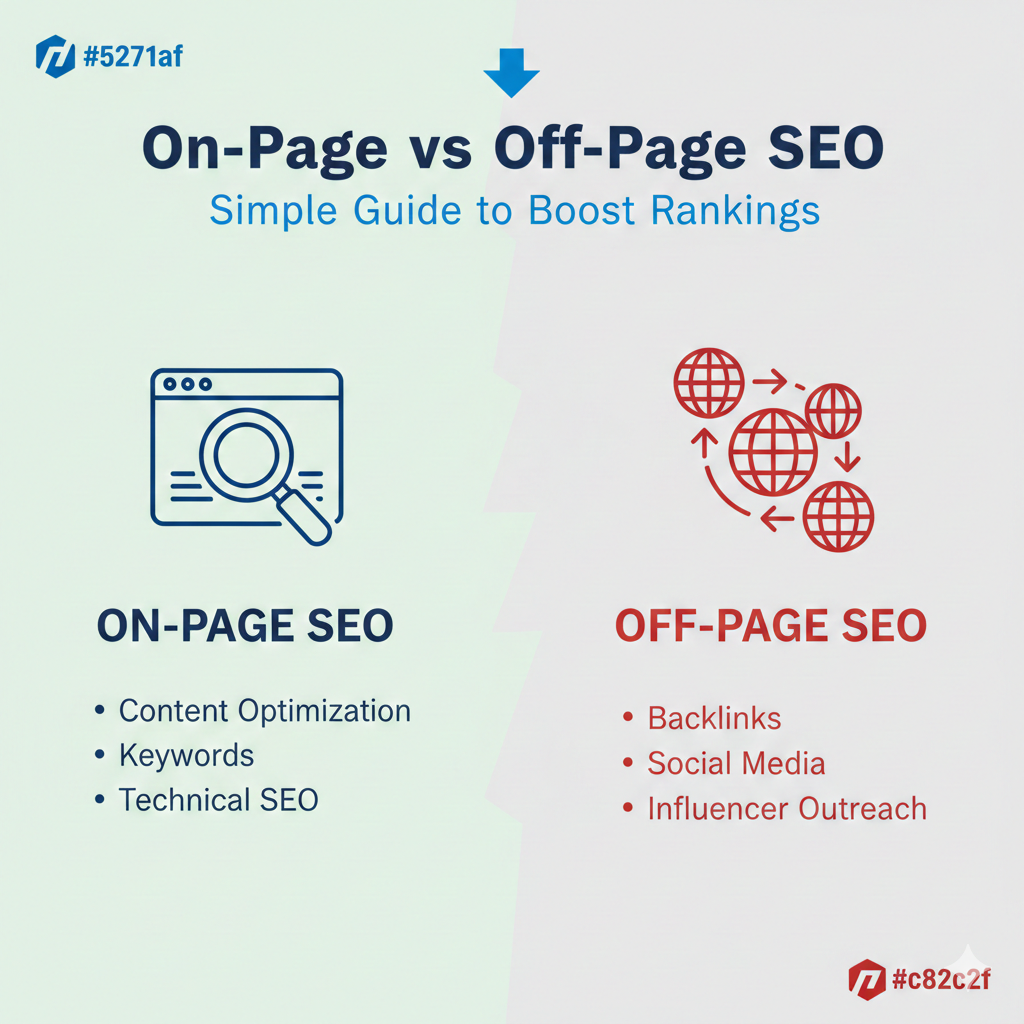
- On-page SEO focuses on content, structure, and user experience
- Off-page SEO focuses on authority, links, and reputation
Both are essential. Strong off-page SEO cannot fix poor content, and strong content alone may struggle without authority.
Common Off-Page SEO Mistakes to Avoid
Many websites harm their rankings by using risky off-page tactics, such as:
- Buying low-quality backlinks
- Using automated link-building tools
- Participating in link schemes
- Over-optimizing anchor text
These tactics can trigger Google penalties and reduce visibility.
What Good Off-Page SEO Looks Like
Effective off-page SEO is:
- Natural and gradual
- Focused on quality over quantity
- Built through relevant websites and real relationships
When done correctly, off-page SEO supports long-term growth and sustainable rankings.
Off-Page SEO Methods That Actually Work
Now that you understand what off-page SEO is and why it matters, the next step is to implement methods that build authority, trust, and rankings. Not all off-page strategies are equal—some are outdated, risky, or ineffective in 2026. Focus on white-hat techniques that actually work.
Backlink Building (High-Quality Links)
Backlinks remain the cornerstone of off-page SEO. However, quality beats quantity every time.
Best practices:
- Target relevant websites in your niche
- Earn links naturally through valuable content
- Avoid spammy directories or paid links
Types of high-quality backlinks:
- Editorial links (links from blogs or news articles)
- Guest posting links on relevant sites
- Resource or reference links from authoritative sites
Backlinks signal to Google that your content is trusted and authoritative.
Guest Posting on Relevant Blogs
Guest posting allows you to contribute valuable content to other websites and earn backlinks.
Tips for effective guest posting:
- Only target reputable sites in your industry
- Provide high-quality, original content
- Include contextual backlinks (avoid over-optimized anchor text)
Guest posting helps you build both authority and referral traffic.
Business Citations & Directory Listings
For local businesses, citations are a critical off-page signal.
How it works:
- List your business on reputable directories (Google Business Profile, Yelp, Bing Places)
- Ensure NAP consistency (Name, Address, Phone) across platforms
Citations help search engines verify your business and improve local SEO rankings.
Brand Mentions & PR
Even unlinked brand mentions can influence SEO. When your brand is talked about across blogs, forums, and social media, Google notices.
- Aim for mentions in relevant industry publications
- Issue press releases for notable business updates
- Engage with industry influencers for coverage
Brand mentions enhance trust and authority, indirectly improving rankings.
Social Signals & Engagement
Although social media shares aren’t direct ranking factors, they amplify reach and increase chances of natural backlinks.
- Share blog posts on LinkedIn, Twitter, Facebook, and niche forums
- Engage with followers and participate in discussions
- Encourage shares and comments
More visibility often leads to organic backlinks and referral traffic.
Avoid Black-Hat or Risky Tactics
Some off-page methods can hurt your website:
- Buying links from spammy websites
- Using automated link-building software
- Excessive link exchanges
- Over-optimized anchor text
Stick to natural, white-hat strategies to stay safe and sustainable.
Off-Page SEO Backlinks: Quality Over Quantity
Backlinks are the foundation of off-page SEO, but not all backlinks are created equal. Many beginners make the mistake of chasing high numbers rather than focusing on quality, relevance, and trustworthiness. Google values backlinks that signal authority, not just links for the sake of SEO.
What Makes a Backlink Valuable?
A strong backlink has several qualities:
- Relevance – The linking site is related to your niche or industry.
- Authority – High domain authority (DA) sites pass more link equity.
- Trustworthiness – Sites with clean SEO practices are preferred.
- Contextual Placement – Links placed within content are stronger than sidebar or footer links.
- Natural Anchor Text – Descriptive, relevant anchor text works better than exact-match keyword stuffing.
Tip: A few high-quality backlinks are more powerful than hundreds of low-quality links.
Do-Follow vs No-Follow Links
Backlinks can be do-follow or no-follow:
- Do-Follow Links – Pass link equity (ranking power) to your site. Ideal for off-page SEO.
- No-Follow Links – Do not directly impact rankings but can still drive referral traffic and brand awareness.
A healthy backlink profile contains a mix of both, with emphasis on high-quality do-follow links.
Anchor Text Best Practices
Anchor text is the clickable text used for backlinks. Optimizing anchor text incorrectly can trigger Google penalties.
Best practices:
- Use natural, descriptive phrases
- Include keywords sparingly
- Avoid exact-match over-optimization
- Diversify anchor text across backlinks
Example: Instead of forcing “off-page SEO services” everywhere, try variations like:
- “Learn more about off-page SEO methods”
- “Backlink strategies for websites”
Backlinks to Avoid
Not all links help your SEO; some can hurt it:
- Paid links from spammy websites
- Links from unrelated niches
- Links from low-quality directories or link farms
- Excessive reciprocal linking
Focus on earning links naturally from authoritative sources.
On-Page vs Off-Page SEO: Side-by-Side Comparison
Understanding the difference between on-page SEO and off-page SEO is essential for building a complete SEO strategy. Both play distinct roles but work together to improve your website’s rankings.
Here’s a quick comparison:
| Feature | On-Page SEO | Off-Page SEO |
| Definition | Optimization done inside your website to improve content, structure, and user experience | Optimization done outside your website to build authority, trust, and backlinks |
| Control | Fully under your control | Partially controlled (depends on other websites and users) |
| Main Focus | Content quality, keywords, HTML elements, UX | Backlinks, brand mentions, social signals, citations |
| Time to Results | Usually faster (weeks to months) | Slower (months to years) |
| Risk Level | Low risk; mistakes are fixable | Higher risk if using black-hat tactics |
| Examples | Optimized title tags, meta descriptions, header tags, internal linking, image optimization | Guest posts, backlinks from authoritative sites, business citations, brand mentions |
| Goal | Helps search engines understand relevance | Signals trust and authority to search engines |
| Keyword Targeting | Focus on primary and long-tail keywords | Focus on reputation, anchor text, and link equity |
How to Improve Organic SEO
Improving organic SEO means increasing your website’s visibility in search engines without paying for ads. Many beginners focus on high-volume, competitive keywords—but targeting low-competition, long-tail keywords is often faster and easier for new websites.
Conclusion
SEO combines on-page and off-page strategies. Start with on-page SEO—optimize content, headings, images, and links, and ensure your site is fast and mobile-friendly. Then gradually build off-page SEO with high-quality backlinks, guest posts, and brand mentions. SEO takes time and consistent effort, but when done right, even new sites can rank for low-competition keywords. In short, on-page SEO builds the foundation, off-page SEO builds authority, and both are essential for long-term growth.
FAQ’s
1. What is the difference between on-page and off-page SEO?
On-page SEO refers to optimizing elements within your website like content, meta tags, headings, images, and internal links. Off-page SEO focuses on actions outside your website, such as backlinks, brand mentions, and citations, to improve authority and trust.
2. Which should I focus on first, on-page or off-page SEO?
Always start with on-page SEO. A well-optimized website makes off-page efforts more effective and ensures Google understands your content before building authority.
3. How long does it take to see results from SEO?
On-page SEO improvements can show results in weeks to months, while off-page SEO (backlinks, authority building) may take months to a year. Patience and consistency are key.
4. Can I do SEO myself, or should I hire services?
Beginners can start with DIY on-page SEO using free tools like Google Search Console, Analytics, and WordPress plugins. For off-page SEO, professional services may help accelerate results safely with high-quality backlinks and brand-building strategies.
5. What are some common mistakes to avoid in SEO?
- Overloading pages with keywords (keyword stuffing)
- Buying low-quality backlinks
- Ignoring mobile optimization and page speed
- Not updating old content or fixing broken links