

You publish content with intention—whether it’s a visual, a thought leadership post, or a campaign update—yet engagement suddenly drops. Fewer likes. Fewer comments. Your reach seems to disappear without warning. When performance shifts this abruptly, it raises a valid question: Why isn’t my content being seen?
This experience is increasingly common across platforms such as Instagram, TikTok, X (formerly Twitter), LinkedIn, and others. Businesses and creators alike report sudden changes in social media visibility, even when content quality and posting consistency remain unchanged. In many cases, the cause is not strategy or relevance—it is algorithmic behavior.
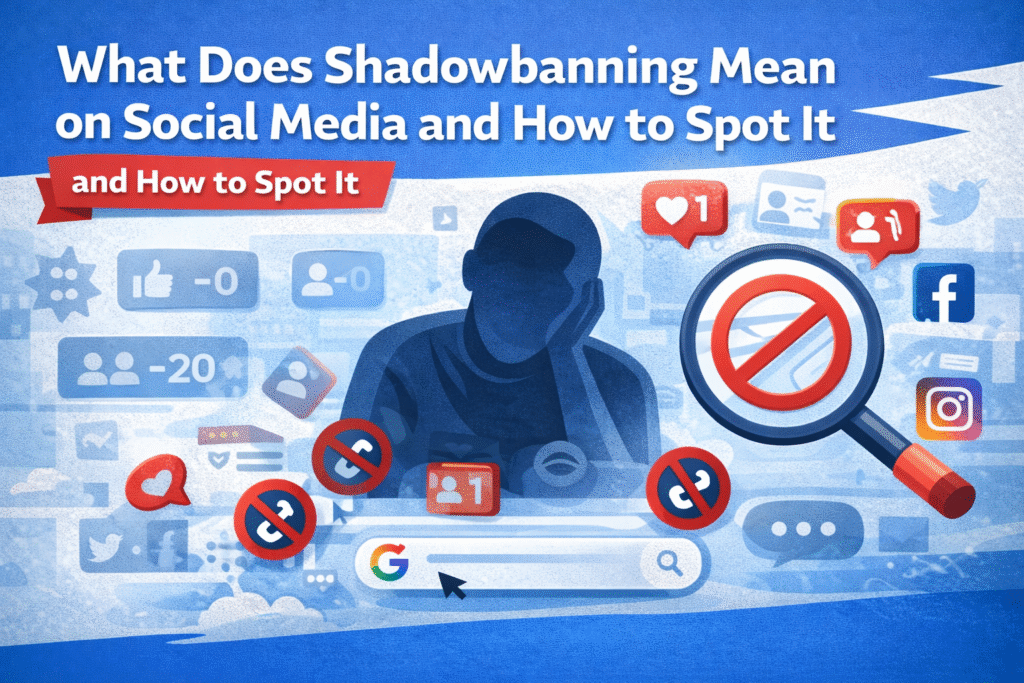
This is where understanding the shadowban definition becomes critical. Shadowbanning refers to subtle visibility limitations driven by automated systems rather than explicit penalties. Recognizing the difference between normal fluctuations and algorithmic suppression allows brands to respond strategically rather than reactively.
This guide explains what shadowbanning is, how it impacts reach and engagement, and how to identify, assess, and recover from reduced reach in an increasingly automated content ecosystem.
Shadowban Definition and How It Differs Across Social Platforms
The shadowban definition refers to a form of silent visibility limitation where a platform restricts how widely content is distributed without notifying the account holder. Posts remain published, but fewer users see them in feeds, search results, or discovery areas.
Unlike full bans, shadowbans do not prevent posting or account access. Instead, they quietly reduce exposure—often leading to confusion and misdiagnosis of performance issues.
Shadowbanning presents differently depending on the platform:
- Instagram: Posts may not appear in hashtag feeds or discovery sections
- TikTok: Video distribution may be limited due to safety or policy flags
- X (Twitter): Replies may be deprioritized or hidden in conversations
- YouTube: Content may receive fewer recommendations
- LinkedIn: Reach may decrease following repeated guideline friction
While platforms rarely use the term “shadowban,” they openly acknowledge the use of automated systems tied to content moderation and ranking controls designed to manage scale and safety.

How Major Platforms Handle Shadowbanning
| Platform | Possible Shadowban Indicators | Duration | Resolution Steps |
| Reduced reach or hashtag visibility | Temporary | Audit hashtags, pause posting | |
| TikTok | Low video distribution | 2–14 days | Review content guidelines |
| X (Twitter) | Replies hidden or search loss | 24–48 hours | Avoid repetitive behavior |
| YouTube | Fewer recommendations | Ongoing | Optimize titles and metadata |
| Engagement drops after frequent posting | Temporary | Vary formats and cadence |
Understanding these distinctions allows businesses to tailor recovery actions rather than applying generic fixes.
Signs of Reduced Reach, Hidden Posts, and Falling Social Media Visibility
Identifying shadowbanning requires pattern recognition. One low-performing post is normal. Persistent performance decline is not.
Common indicators include:
- Sudden engagement decline across multiple posts
- Noticeable drops in impressions or reach
- Followers reporting they no longer see your updates
- Hidden posts that only appear to the account owner in hashtag searches
- Analytics showing unexplained visibility loss
When these signals persist, the issue often lies in content distribution logic—not audience interest or creative quality.
Modern moderation systems rely heavily on behavioral signals. Repetitive captions, excessive activity, or automation-like patterns can trigger reduced exposure even without policy violations.
Algorithmic Suppression Signals and How They Impact Engagement
Algorithmic suppression occurs when a platform’s recommendation system deprioritizes content based on perceived risk signals. These systems operate at scale and may misinterpret legitimate activity as spam or manipulation.
Common triggers include:
- Rapid posting within short timeframes
- Repeated hashtag usage
- Engagement baiting or mass tagging
- Flagged or sensitive keywords
- Excessive outbound linking
- Copyright or metadata inconsistencies
When suppression occurs, content stops surfacing in discovery environments such as Explore or For You feeds. This leads directly to reduced reach, even though the account remains active and functional.
Engagement Decline Metrics That Indicate a Shadowban
Analytics provide objective insight into whether performance changes are algorithmic or organic. Monitoring trends is essential for diagnosis.
Key metrics to evaluate include:
- Impressions: Sharp drops suggest limited distribution
- Profile visits: Often decline following suppressed posts
- Follower growth: Plateaus may signal visibility issues
- Click-through rates: Lower rates indicate fewer appearances
- Engagement ratio: Falling interactions relative to views
Comparing the most recent 30 days to a prior period helps isolate anomalies tied to algorithmic behavior.
Engagement Metrics and What They Reveal
| Metric | Normal Variance | Shadowban Indicator | Possible Action |
| Reach | ±15% fluctuation | Drops over 50% | Pause posting for 48 hours |
| Engagement Rate | 1–5% average | Below 1% consistently | Review compliance |
| Hashtag Views | Minor variation | Zero visibility | Rotate hashtags |
| Followers | Gradual growth | Sudden stagnation | Increase genuine engagement |
| Story Views | Small decline | Reduced by half | Repost after a short break |
These indicators support data-driven decisions rather than assumptions.
Account Restrictions Versus Bans and What Each Looks Like
Shadowbanning is often confused with other enforcement actions. Clear differentiation is critical.
1. Shadowban
- Limits distribution, not functionality
- Typically temporary and automated
- Often tied to content moderation filters
2. Account Restrictions
- Specific features are limited (posting, commenting, messaging)
- Usually accompanied by a notice
- Common after repeated minor violations
3. Full Ban or Suspension
- Account access removed
- Requires appeal or verification
- Associated with serious or repeated violations
If visibility issues arise, avoid abrupt actions such as mass deletion or unfollowing, which may further trigger moderation systems.
Content Moderation Triggers That Can Lead to a Shadowban
Most shadowbans originate from automated content moderation systems designed to enforce platform standards at scale.
Potential triggers include:
- Copyrighted media usage
- Sensitive or restricted topics
- Excessive posting frequency
- Repetitive tagging or hashtags
- Frequent external links
While these systems aim to protect users, they can unintentionally restrict compliant accounts. Strategic awareness is key to prevention.
Steps to Assess a Shadowban and Actions to Regain Visibility
If you suspect shadowbanning, respond methodically—not emotionally.
Recommended steps:
- Review recent content for moderation risks
- Pause posting for 48–72 hours
- Engage organically with other accounts
- Test alternative formats (stories, video, carousels)
- Contact platform support if needed
Preventive best practices:
- Stay current with platform rules
- Avoid automation tools
- Rotate hashtags and posting schedules
- Maintain natural language captions
- Prioritize quality over volume
Consistent, authentic engagement remains the most reliable long-term solution.
Every Post Deserves to Be Seen: Find Your Voice Again
Temporary visibility loss can be frustrating, especially for brands investing in content strategy. However, shadowbanning is rarely permanent. It is a signal to refine approach, align with platform expectations, and reinforce authenticity.
By focusing on clarity, consistency, and strategic compliance, visibility often stabilizes and improves over time. Algorithms evolve—but value-driven content remains resilient.
FAQs
1. How does the shadowban definition vary across platforms?
Each platform limits visibility differently—some reduce discovery reach, others affect search or recommendations—often without direct notification.
2. What signs indicate hidden posts or reduced social media visibility?
Persistent engagement decline, missing hashtag visibility, and follower reports are common indicators.
3. How does algorithmic suppression affect engagement?
It deprioritizes content based on behavioral signals, resulting in fewer impressions and interactions.
4. Which metrics help identify reduced reach?
Reach, impressions, follower growth, and hashtag visibility provide the clearest indicators.
5. How do account restrictions differ from full bans?
Account restrictions limit specific features temporarily, while full bans remove access entirely. Reduced visibility with full access typically indicates a shadowban.