

You can build a powerful website with sleek design, innovative services, and strong messaging—yet still struggle to attract traffic. You search for your business online and realize it’s buried beneath competitors. This is where understanding search engine optimization becomes essential for visibility, scalability, and long-term growth.
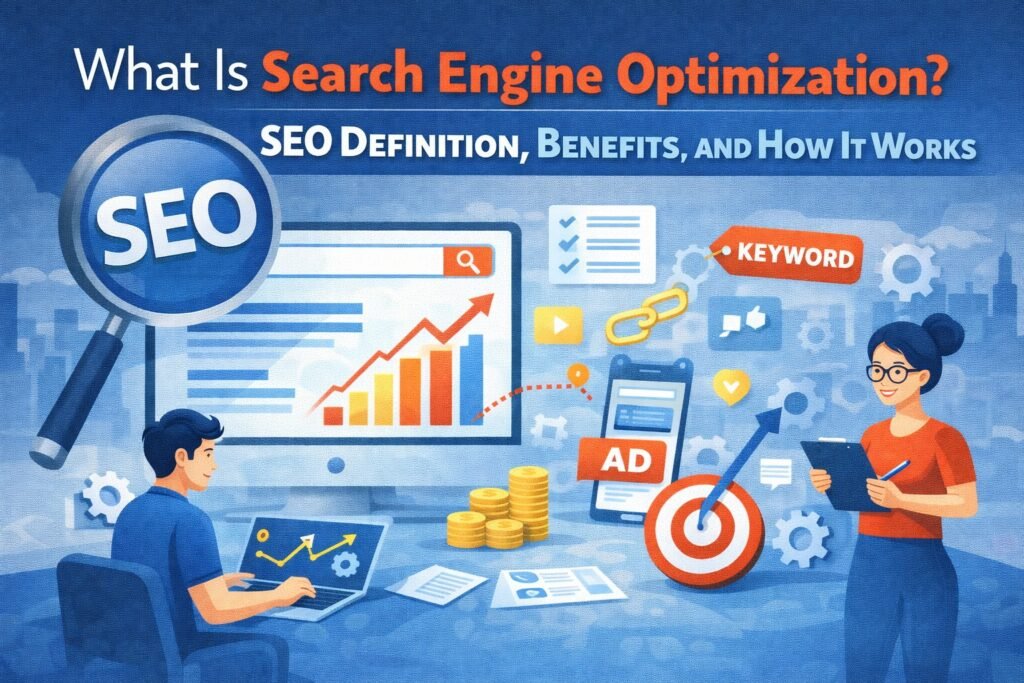
Search engine optimization (SEO) is the strategic process of improving a website’s structure, content, and authority so it ranks higher in organic search results. Beyond algorithms and rankings, SEO is about precision—aligning your digital presence with real user intent. When implemented correctly, SEO connects your business with audiences actively searching for your solutions while strengthening trust and credibility.
In this guide, AlphaTech Solution breaks down the SEO definition, core principles, and practical execution. You’ll learn how SEO works, explore on-page, off-page, and technical SEO strategies, and understand the measurable SEO benefits that drive sustainable digital performance.
SEO Definition and SEO Basics
At its foundation, SEO focuses on improving a website’s visibility in organic (non-paid) search results. When users enter a query, search engines evaluate billions of pages to identify the most relevant, authoritative, and accessible answers. SEO ensures your website meets those standards.
The core SEO basics include:
- Relevance: Matching content with user search intent
- Quality: Delivering accurate, valuable, and well-structured information
- Accessibility: Making websites easy for users and search engines to navigate
- Authority: Establishing trust through credibility signals and engagement
SEO functions as a long-term digital growth strategy. Rather than relying on short-term tactics, it builds momentum through consistency, optimization, and data-driven refinement.
| SEO Element | Description | Primary Goal | Example |
| On-Page SEO | Optimizations within your website | Improve relevance | Keyword-focused content |
| Off-Page SEO | External authority signals | Build trust | Brand mentions and backlinks |
| Technical SEO | Site infrastructure and performance | Enhance accessibility | Faster page load speeds |
| Content SEO | High-value informational content | Increase engagement | Educational blogs |
| Local SEO | Geographic optimization | Reach local audiences | Optimized business listings |
Together, these components form a comprehensive SEO framework that balances technical excellence with user-centric design.
How SEO Works: Search Engine Optimization and Ranking Signals
To understand how SEO works, it’s important to understand how search engines evaluate content. When a user submits a search query, algorithms analyze multiple ranking signals to determine which pages best satisfy the intent behind that query.
Key ranking signals include:
- Keywords: The search terms users type into engines
- Content quality: Original, authoritative, and up-to-date information
- User experience: Mobile usability, site speed, and intuitive navigation
- Backlinks: References from credible external websites
- Engagement metrics: Time on page, click-through rates, and bounce rates
Search engines deploy automated crawlers to scan websites, index content, and evaluate how effectively each page aligns with these signals. A well-executed SEO strategy ensures search engines clearly understand your site’s purpose and value.
On-Page SEO: Keyword Research, Content Optimization, and Internal Linking
On-page SEO includes all optimizations made directly within your website. It is where technical planning meets strategic content development—ensuring search visibility without compromising clarity or user experience.
Core on-page SEO components include:
- Keyword research: Identifying high-intent search terms your audience uses
- Content optimization: Integrating keywords naturally into headings and body copy
- Internal linking: Structuring logical connections between related pages
- Meta titles and descriptions: Writing concise, keyword-focused summaries
- Image optimization: Using descriptive alt text for accessibility and indexing
On-page SEO signals relevance and reliability, positioning your content as a valuable resource in competitive search environments.
| Technique | Description | Benefit | Example |
| Keyword Placement | Strategic keyword usage | Improved relevance | “SEO definition” in headers |
| Internal Linking | Connecting related pages | Better crawlability | Blog-to-service links |
| Content Formatting | Clear headings and bullets | Enhanced readability | Scannable sections |
| Meta Optimization | Optimized titles and descriptions | Higher click-through rates | Descriptive page titles |
| Image Alt Text | Search-friendly image descriptions | Accessibility | Keyword-aligned alt text |
Each tactic supports the others, strengthening both performance and usability.
Off-Page SEO: Authority, Backlinks, and Brand Trust
While on-page SEO focuses on internal optimization, off-page SEO reflects how your website is perceived across the broader digital ecosystem. It plays a critical role in establishing authority and trust.
Key off-page SEO strategies include:
- Backlink acquisition: Earning links from reputable websites
- Brand mentions: Being referenced across digital platforms
- Content distribution: Increasing visibility through third-party channels
- Citation consistency: Maintaining accurate business information
Backlinks act as credibility signals, indicating that other sources trust your content. Strong off-page SEO reinforces your website’s authority and improves ranking potential.
Technical SEO: Performance, Mobile Optimization, and Indexing
Technical SEO focuses on the infrastructure that supports your website’s visibility. Even high-quality content cannot perform effectively if a site is slow, unstable, or difficult to crawl.
Essential technical SEO factors include:
- Site speed: Optimizing assets to reduce load times
- Mobile responsiveness: Ensuring seamless performance across devices
- Secure connections: Using HTTPS to protect user data
- XML sitemaps: Helping search engines locate key pages
- Structured data: Enhancing search result presentation
Technical SEO removes friction, enabling both users and search engines to access content efficiently.
SEO Benefits: Traffic Growth, Credibility, and Long-Term Value
The long-term SEO benefits extend far beyond rankings. SEO delivers measurable value across the entire digital marketing funnel.
Primary benefits include:
- Increased organic traffic: Sustainable growth without ongoing ad spend
- Enhanced credibility: Higher trust in brands that rank organically
- Improved user experience: Faster, more accessible websites
- Scalable visibility: Long-term performance gains
- Actionable insights: Data-driven optimization opportunities
SEO transforms visibility into authority, supporting consistent lead generation and brand growth.
Building Sustainable Growth with SEO
SEO is not a one-time initiative—it’s an ongoing optimization process that evolves alongside user behavior and search algorithms. With a disciplined, strategic approach, SEO becomes a powerful growth engine.
For businesses focused on performance, scalability, and digital leadership, SEO ensures your brand is not just present—but discoverable by the audiences that matter most.
FAQs
What is the SEO definition and how does it relate to SEO basics?
The SEO definition refers to optimizing a website’s content, structure, and authority to improve visibility in organic search results. SEO basics include relevance, usability, and trust.
How does SEO work in improving search engine rankings?
SEO works by aligning your website with ranking signals such as keywords, backlinks, and user experience, helping search engines evaluate relevance and quality.
What are the most important on-page SEO elements?
On-page SEO includes keyword optimization, internal linking, content formatting, and metadata—each improving relevance and engagement.
How does off-page SEO influence authority and credibility?
Off-page SEO builds trust through backlinks and brand mentions, signaling credibility to search engines and users.
Why is technical SEO critical for performance and indexing?
Technical SEO ensures fast load times, mobile compatibility, and proper indexing, supporting both rankings and user experience.