

Overview
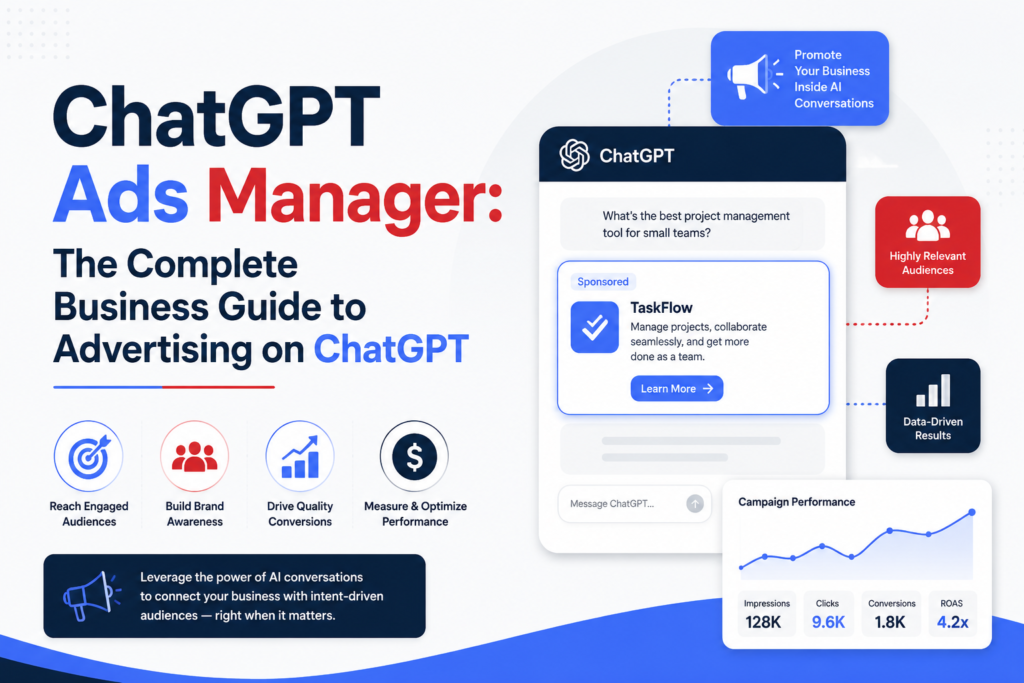
ChatGPT Ads Manager is changing how businesses reach customers through AI-powered conversations. Unlike traditional advertising platforms that rely heavily on keywords, ChatGPT Ads focus on user intent, context, and natural interactions. As AI search continues to grow, businesses have a new opportunity to connect with high-intent audiences during the research and decision-making process. This guide explores how ChatGPT Ads work, their potential benefits, advertising costs, campaign setup, and how they compare to Google Ads. You’ll also learn which industries can benefit most and what the future of AI advertising may look like.
Introduction
Artificial intelligence is changing the way people search for information, compare products, and make buying decisions online. While businesses still rely on SEO, Google Ads, and social media marketing, a new opportunity is emerging through ChatGPT Ads Manager.
As more users turn to ChatGPT for recommendations, research, and problem-solving, brands can reach potential customers through relevant conversations instead of traditional search results. This allows businesses to connect with people who are actively looking for solutions.
In this guide, you’ll learn what ChatGPT Ads Manager is, how it works, its potential costs, how it compares with Google Ads, and whether it could be a valuable marketing channel for your business in 2026 and beyond.
What Is ChatGPT Ads Manager?
ChatGPT Ads Manager is OpenAI’s advertising platform that allows businesses to create, manage, and optimize advertising campaigns within the ChatGPT ecosystem. It is designed to help advertisers reach users through conversational and context-aware interactions rather than relying exclusively on traditional keyword-based advertising.
Understanding the Shift Toward Conversational Advertising
For more than two decades, digital advertising has largely revolved around search engines and social media platforms. Businesses bid on keywords, create ad campaigns, and compete for visibility in search results.
However, user behavior is changing.
Instead of typing short keyword phrases into search engines, people increasingly ask detailed questions through AI-powered assistants. They seek recommendations, compare products, research services, and request personalized advice.
Why Did OpenAI Launch an Advertising Platform?
The rapid growth of AI-powered search experiences has created a new opportunity for advertisers.
Businesses want access to audiences who are actively researching products and services through conversational interfaces. At the same time, AI platforms need sustainable monetization models that support continued innovation and platform growth.
Advertising offers a natural solution.
By introducing an advertising platform, OpenAI can create opportunities for brands while maintaining a useful experience for users. This approach mirrors the evolution of search engines, where advertising became an essential part of the ecosystem.
How ChatGPT Ads Manager Differs From Traditional Advertising Platforms
One of the most important differences between ChatGPT Ads Manager and traditional advertising platforms is how intent is interpreted.
Traditional advertising often relies on:
- Keywords
- Search volume
- Audience demographics
- Behavioral signals
Conversational advertising introduces additional layers of context, including:
- User intent
- Conversation history
- Question complexity
- Research stage
- Purchase consideration signals
This means advertisers may be able to reach users during more informed stages of the customer journey.
For businesses, this creates the potential for higher-quality interactions and more relevant advertising experiences,
Why Businesses Should Pay Attention
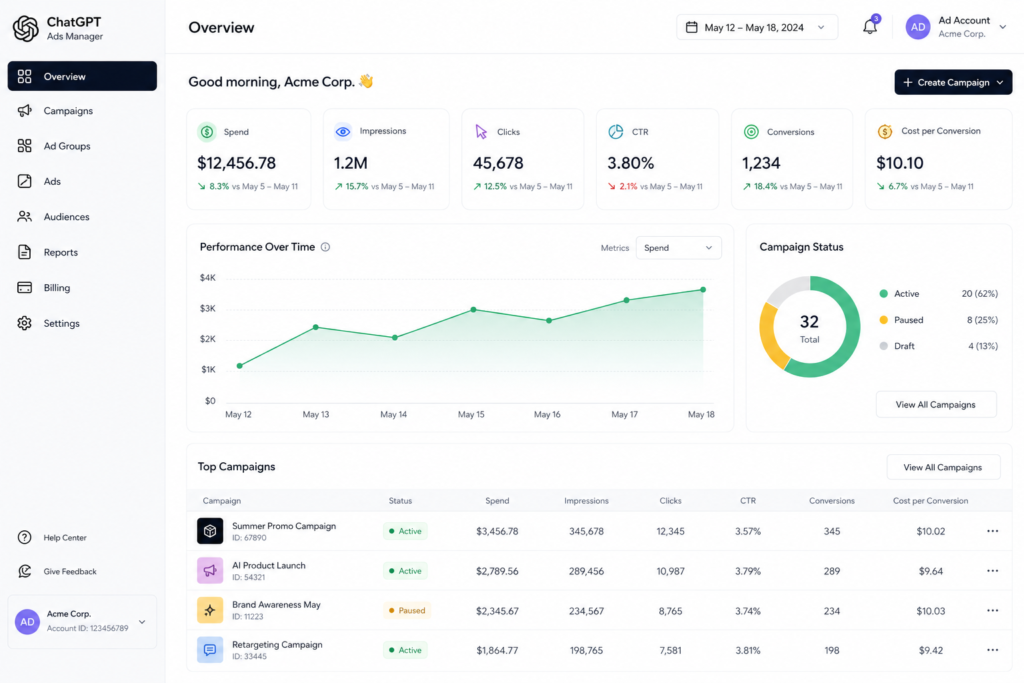
Although AI advertising is still in its early stages, many experts believe conversational advertising could become one of the most important channels of the next decade.
Businesses that begin learning and testing AI advertising today may gain advantages such as:
- Lower competition
- Early market positioning
- Access to emerging audiences
- Improved understanding of conversational search behavior
- New customer acquisition opportunities
As adoption continues to grow, understanding ChatGPT Ads Manager could become as important as understanding Google Ads was during the early years of search advertising.
How Does ChatGPT Advertising Work?
ChatGPT advertising works by connecting relevant advertising opportunities with user conversations. Instead of relying solely on keyword matching, the platform can use conversational context and user intent to determine when advertising messages may be most relevant.
Moving Beyond Keywords
Traditional search advertising depends heavily on keyword targeting.
For example, a business may bid on:
- SEO agency
- local SEO services
- PPC management
When a user searches for those keywords, the advertiser competes for visibility.
ChatGPT advertising introduces a different approach.
Rather than focusing exclusively on individual keywords, the platform can understand the broader context of a conversation.
The Role of User Intent
Intent is one of the most valuable signals in modern marketing.
Not every user is ready to buy.
Some are researching.
Some are comparing options.
Others are actively looking for a solution.
ChatGPT conversations often reveal these stages more clearly than traditional search queries because users naturally provide additional context when interacting with AI.
For advertisers, this can create stronger opportunities to connect with potential customers at the right moment.
Contextual Targeting in AI Advertising
Contextual targeting focuses on the topic and meaning of a conversation rather than relying solely on historical user behavior.
For example:
A business selling project management software may benefit from conversations involving:
- Team collaboration
- Workflow automation
- Productivity tools
- Project tracking
This allows advertising to align more closely with what users are actively discussing and researching.
Potential Benefits for Advertisers
Businesses exploring ChatGPT advertising may benefit from:
- Higher-intent audiences
- More relevant engagement opportunities
- Reduced competition compared to mature advertising platforms
- Better alignment with conversational search trends
While the advertising ecosystem is still evolving, the shift toward AI-driven interactions suggests that conversational advertising could become a significant part of future digital marketing strategies.
Why Businesses Are Paying Attention to ChatGPT Ads
Businesses are paying attention to ChatGPT Ads because conversational AI is changing how people discover products, services, and solutions online. As more users rely on AI assistants for recommendations and research, brands have an opportunity to connect with high-intent audiences earlier in the buying journey.
The Rise of AI-Powered Customer Journeys
For years, businesses have depended on search engines and social media platforms to attract customers. A typical customer journey often looked like this:
- Search on Google
- Visit multiple websites
- Compare options
- Read reviews
- Make a decision
Today, that journey is evolving.
Many users now start their research directly inside AI platforms. Instead of opening multiple browser tabs, they ask detailed questions and receive personalized responses within a single conversation.
Higher Intent Means Better Opportunities
One of the biggest advantages of conversational advertising is user intent.
Traditional search queries often provide limited information. A keyword like:
“marketing agency”
could mean many different things.
However, when a user explains their business goals, challenges, budget, and objectives during a conversation, advertisers gain a much clearer understanding of what that person actually needs.
This can lead to:
- More qualified traffic
- Better lead quality
- Higher conversion potential
- Improved advertising efficiency
Less Competition Than Traditional Platforms
Platforms like Google Ads and Meta Ads have become highly competitive.
Many industries experience:
- Rising CPCs
- Increased competition
- Ad fatigue
- Lower visibility
Because ChatGPT advertising is still in its early stages, many businesses have not yet developed a dedicated AI advertising strategy.
This creates an opportunity for early adopters to:
- Experiment with lower competition
- Gather market insights
- Build expertise before the platform becomes crowded
A New Channel for Customer Acquisition
Businesses are constantly looking for new ways to acquire customers.
The companies that succeeded with Google Ads in its early years often gained significant advantages because they adopted the platform before competition intensified.
The same principle may apply to conversational advertising.
Organizations that start learning how ChatGPT Ads Manager works today may be better prepared for future changes in digital marketing.
Why This Matters for Small Businesses
Many small businesses assume new advertising platforms are only useful for large brands.
However, smaller organizations often benefit the most from emerging channels because:
- Competition is lower
- Testing costs may be manageable
- Early visibility can create long-term advantages
For local businesses, service providers, consultants, healthcare clinics, law firms, and SaaS companies, conversational advertising could become an important addition to existing marketing channels.
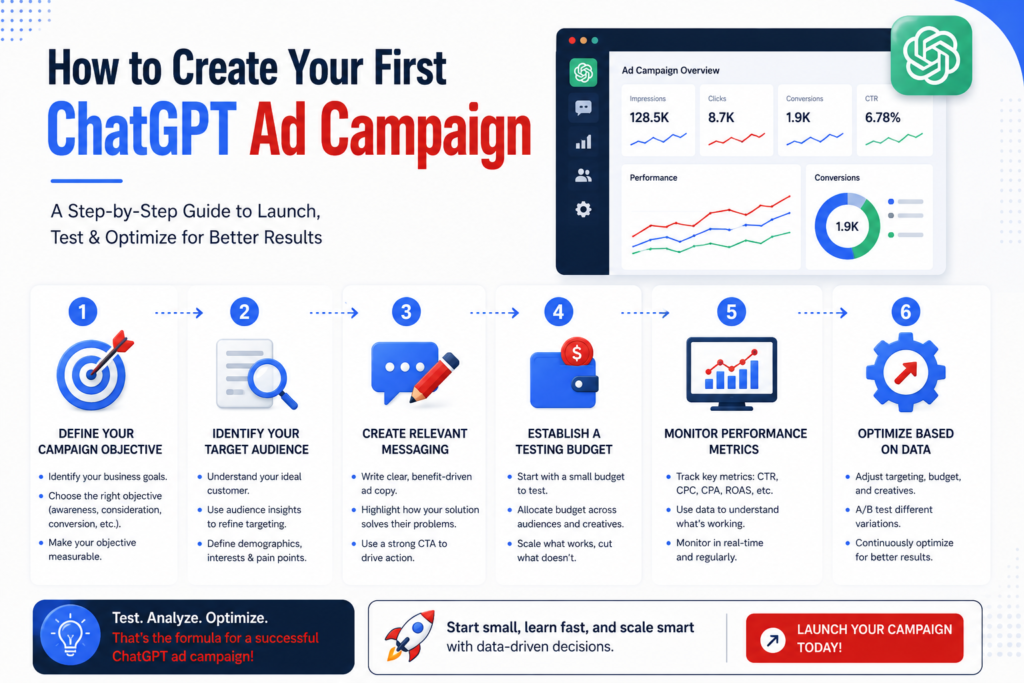
How to Create Your First ChatGPT Ad Campaign
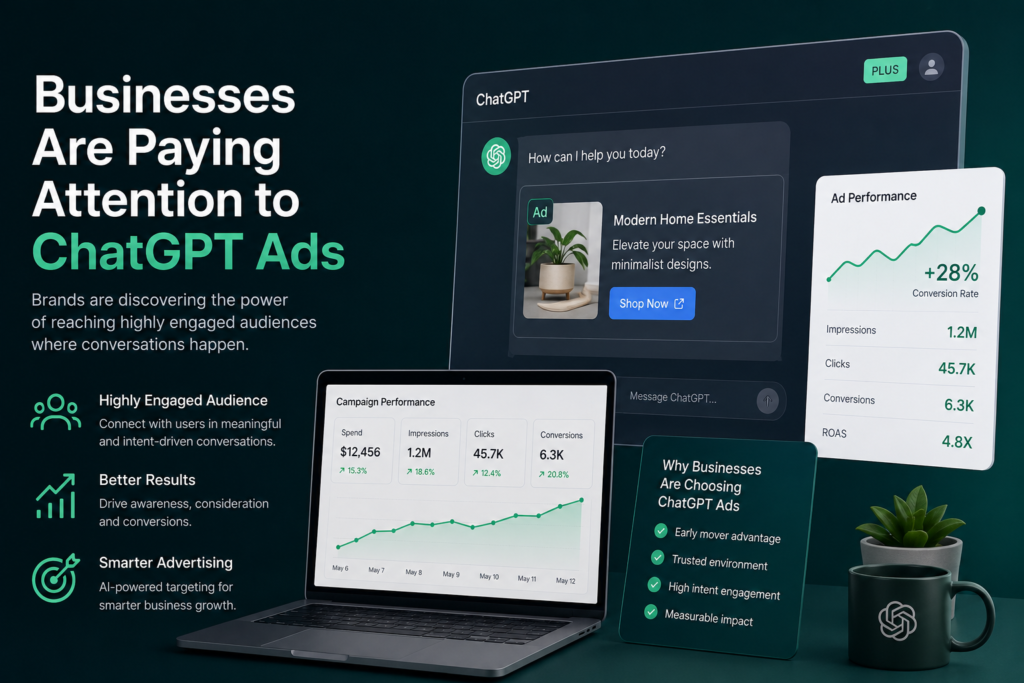
Creating a ChatGPT ad campaign typically involves setting campaign goals, identifying your target audience, establishing a budget, developing ad messaging, and monitoring campaign performance. Like any advertising platform, success depends on strategy, targeting, and continuous optimization.
Step 1: Define Your Campaign Objective
Before launching any campaign, identify what success looks like.
Common advertising objectives include:
- Lead generation
- Brand awareness
- Website traffic
- Product sales
- Appointment bookings
- Free trial signups
Without a clear objective, it becomes difficult to measure campaign performance.
Step 2: Understand Your Ideal Customer
The most successful advertising campaigns start with a deep understanding of the target audience.
Ask questions such as:
- Who is my ideal customer?
- What problems are they trying to solve?
- What questions do they frequently ask?
- What stage of the buying journey are they in?
Because conversational advertising relies heavily on context and intent, understanding customer pain points becomes even more important.
Step 3: Create Relevant Messaging
Generic advertising rarely performs well.
Your messaging should address:
- Customer challenges
- Desired outcomes
- Specific benefits
- Unique selling points
Instead of saying:
“Best SEO Services”
A stronger message might be:
“Increase Local Search Visibility and Generate More Qualified Leads Through Data-Driven SEO Strategies.”
The more closely your message aligns with user intent, the more effective your campaign is likely to be.
Step 4: Establish a Testing Budget
One of the most common mistakes businesses make is expecting immediate results.
When exploring a new advertising platform, begin with a testing budget.
The goal is to:
- Collect data
- Understand audience behavior
- Identify high-performing campaigns
- Refine targeting strategies
Successful advertisers often treat the first campaigns as learning opportunities rather than immediate profit generators.
Step 5: Monitor Performance Metrics
Advertising without tracking is simply guessing.
Important metrics may include:
- Click-through rate (CTR)
- Conversion rate
- Cost per lead
- Cost per acquisition
- Return on ad spend (ROAS)
These metrics help businesses understand whether campaigns are generating meaningful results.
Step 6: Optimize Based on Data
The best-performing campaigns are rarely perfect from day one.
Continuous optimization is essential.
This may involve:
- Improving ad messaging
- Refining targeting
- Adjusting budgets
- Testing different offers
- Improving landing pages
Small improvements made consistently can produce significant long-term gains.
Common Mistakes to Avoid
When creating your first ChatGPT advertising campaign, avoid:
- Targeting everyone
- Using vague messaging
- Ignoring conversion tracking
- Setting unrealistic expectations
- Failing to test multiple approaches
ChatGPT Ads Cost Explained
ChatGPT Ads costs depend on several factors, including campaign objectives, audience targeting, competition levels, bidding strategies, and overall advertising demand. As with most advertising platforms, costs can vary significantly based on industry and campaign goals.
Understanding How Advertising Costs Work
One of the first questions businesses ask before trying a new advertising platform is:
“How much will it cost?”
The honest answer is that there is no universal price.
Advertising costs are influenced by:
- Industry competition
- Audience demand
- Campaign objectives
- Geographic targeting
- Ad quality and relevance
- Conversion goals
Just as Google Ads costs differ between industries, ChatGPT advertising costs are expected to vary based on market demand and advertiser competition.
Common Pricing Models
Most digital advertising platforms use one or more of the following pricing structures.
Cost Per Click (CPC)
With a CPC model, advertisers pay when users interact with an advertisement.
This model is often preferred by businesses focused on:
- Lead generation
- Website traffic
- Product inquiries
- Service bookings
Cost Per Thousand Impressions (CPM)
Under CPM pricing, advertisers pay based on the number of times an ad is displayed.
This approach is commonly used for:
- Brand awareness
- Product launches
- Market visibility
- Audience reach campaigns
Performance-Based Optimization
As AI advertising evolves, advertisers may see additional optimization options based on:
- Conversions
- Leads
- Sales
- User engagement
- Customer acquisition goals
What Budget Should Small Businesses Start With?
For most businesses, a testing phase is the smartest approach.
Instead of investing heavily from day one, businesses can begin with a controlled budget and evaluate performance before scaling.
A practical starting framework might look like this:
| Business Type | Suggested Testing Budget |
| Local Business | $300–$1,000 per month |
| Professional Services | $500–$2,000 per month |
| SaaS Company | $1,000–$5,000 per month |
| Ecommerce Brand | $1,000–$10,000 per month |
The objective during this stage is not maximum profit.
The objective is learning:
- Which audiences respond best
- Which messages generate engagement
- Which offers produce conversions
Is ChatGPT Advertising Expensive?
At this stage, many businesses view ChatGPT advertising as an emerging opportunity rather than a mature advertising channel.
Because adoption is still developing, some advertisers may find less competition compared to established platforms.
However, as more businesses enter the market, costs are likely to evolve.
ChatGPT Ads vs Google Ads: Which Platform Is Better?
ChatGPT Ads and Google Ads serve different purposes. Google Ads excels at capturing demand through keyword searches, while ChatGPT Ads focuses on conversational intent and contextual engagement. The best platform depends on your goals, industry, budget, and target audience.
Understanding the Core Difference
At first glance, both platforms help businesses reach potential customers.
However, they operate in fundamentally different ways.
Google Ads is primarily built around search intent expressed through keywords.
ChatGPT advertising focuses on conversational intent expressed through natural language interactions.
ChatGPT Ads vs Google Ads Comparison
| Feature | ChatGPT Ads | Google Ads |
| Targeting Method | Conversational Context | Keywords |
| User Interaction | Natural Conversations | Search Queries |
| Competition Level | Emerging | Highly Competitive |
| Intent Signals | Detailed & Contextual | Keyword-Based |
| Learning Curve | Moderate | Moderate |
| Market Maturity | Early Stage | Mature Platform |
Advantages of ChatGPT Ads
Richer User Context
Users often provide detailed information during conversations.
This can help advertisers understand:
- Business needs
- Challenges
- Purchase intent
- Decision-making factors
Potential Early-Mover Advantage
Businesses entering new advertising channels early often gain valuable experience before competition increases.
Growing AI Adoption
As AI assistants become more common, conversational advertising may become an increasingly important marketing channel.
Advantages of Google Ads
Massive Audience Reach
Google remains one of the largest advertising ecosystems in the world.
Businesses can reach users across:
- Search
- Display
- Shopping
- YouTube
- Mobile Apps
Proven Advertising Infrastructure
Google Ads offers:
- Advanced reporting
- Extensive targeting options
- Mature optimization tools
- Large advertiser ecosystem
Immediate Search Demand
Google excels at capturing users actively searching for products and services.
Which Platform Generates Better Leads?
The answer depends on the business.
Businesses that benefit from educational buying journeys may find conversational advertising particularly valuable.
Examples include:
- SaaS companies
- Marketing agencies
- Healthcare providers
- Professional services firms
- B2B organizations
Meanwhile, businesses relying on high-volume search traffic may continue to benefit significantly from Google Ads.
Which Platform Is Better for Small Businesses?
Small businesses should evaluate:
- Marketing goals
- Available budget
- Industry competition
- Customer behavior
For many organizations, combining SEO, Google Ads, and emerging AI advertising channels may provide the most sustainable growth strategy.
ChatGPT Ads vs Meta Ads: Understanding the Key Differences
ChatGPT Ads and Meta Ads are designed for different user behaviors. Meta Ads help businesses generate demand through interruption-based advertising on social media, while ChatGPT Ads focus on engaging users who are actively seeking information, recommendations, and solutions through AI-powered conversations.
How Meta Ads Work
Meta’s advertising ecosystem, including Facebook and Instagram, is built around audience targeting.
Advertisers can target users based on:
- Interests
- Demographics
- Behaviors
- Location
- Online activity
This approach is highly effective for brand awareness, product discovery, and retargeting campaigns.
For example, an ecommerce brand can show products to users who have previously visited its website or interacted with related content.
How ChatGPT Ads Differ
ChatGPT advertising focuses less on passive browsing and more on active engagement.
When users interact with ChatGPT, they are often:
- Researching solutions
- Comparing products
- Seeking recommendations
- Solving business challenges
- Exploring purchasing options
This creates opportunities to reach users when they are already thinking about a specific problem or need.
ChatGPT Ads vs Meta Ads Comparison
| Feature | ChatGPT Ads | Meta Ads |
| User Intent | High | Medium |
| Targeting Method | Conversational Context | Interest & Behavior |
| Customer Journey Stage | Research & Decision | Awareness & Consideration |
| User Interaction | AI Conversations | Social Content |
| Competition Level | Emerging | Highly Competitive |
| Ad Environment | Contextual | Social Feed |

Best Industries for ChatGPT Advertising
Although ChatGPT advertising has applications across many industries, businesses that rely on research-driven buying decisions are likely to benefit the most. Industries with longer sales cycles, educational customer journeys, and service-based offerings may see the greatest opportunities.
Healthcare
Healthcare is one of the strongest use cases for conversational advertising.
Patients frequently ask questions such as:
- What therapy options are available?
- How can I manage anxiety?
- What treatment programs should I consider?
These conversations often occur before a patient contacts a provider.
Healthcare organizations can use educational content and advertising strategies to build trust during the research phase.
Real Estate
Buying or selling property involves significant research.
Potential clients often ask questions about:
- Market conditions
- Home buying processes
- Investment opportunities
- Mortgage requirements
Real estate professionals who understand conversational search behavior may gain an advantage in attracting qualified prospects.
SaaS Companies
Software buyers rarely make decisions immediately.
Most SaaS customers spend time:
- Comparing solutions
- Evaluating features
- Reading reviews
- Calculating ROI
ChatGPT advertising can help SaaS brands reach decision-makers during these critical evaluation stages.
Professional Services
Professional service businesses often depend on trust and expertise.
Examples include:
- Marketing agencies
- Law firms
- Accounting firms
- Business consultants
These industries benefit when potential clients seek detailed advice and recommendations before making a purchase decision.
Ecommerce Brands
Although ecommerce traditionally performs well on search and social media platforms, conversational advertising may help brands influence buying decisions earlier in the customer journey.
Users increasingly ask questions such as:
- Which laptop should I buy?
- What is the best fitness tracker for beginners?
- Which CRM software is best for small businesses?
Brands that provide useful information can position themselves effectively during the evaluation process.
Local Businesses
Local businesses represent one of the most overlooked opportunities in AI advertising.
Examples include:
- Dentists
- Chiropractors
- HVAC companies
- Roofing contractors
- Restaurants
- Home service providers
As consumers begin using AI assistants to find local recommendations, businesses with strong local SEO and AI advertising strategies may gain a significant competitive advantage.
ChatGPT Ads for Small Businesses
Small businesses can benefit from ChatGPT Ads by reaching highly relevant audiences during the research and decision-making stages of the buying journey. Early adoption may provide opportunities to compete more effectively against larger brands.
Why Small Businesses Should Pay Attention
Many small business owners assume new advertising technologies are designed exclusively for large corporations.
In reality, emerging platforms often create opportunities for smaller organizations because competition is lower during the early stages of adoption.
Unlike established advertising channels where larger companies dominate budgets, newer platforms may provide more room for experimentation and innovation.
Potential Benefits for Small Businesses
ChatGPT advertising may help small businesses:
- Reach qualified prospects
- Build brand visibility
- Improve lead quality
- Expand local market reach
- Reduce reliance on a single traffic source
Combining SEO and ChatGPT Advertising
One of the most effective growth strategies is combining organic visibility with paid visibility.
For example:
- SEO helps businesses rank in search results.
- Content marketing builds authority.
- ChatGPT Ads create additional visibility during conversational searches.
Together, these channels can strengthen long-term customer acquisition efforts.
The Future of AI Advertising
The future of AI advertising will likely revolve around personalization, conversational experiences, contextual relevance, and intent-based engagement. As AI platforms become more integrated into everyday life, advertisers will need to adapt to changing customer behaviors and expectations.
The Shift From Keywords to Conversations
For years, digital advertising has been built around keywords.
However, conversational AI is changing how people discover information online.
Instead of searching:
“best CRM software”
Users increasingly ask:
“What CRM software is best for a growing business with remote employees and a limited budget?”
This shift provides richer context and deeper insights into customer needs.
Future advertising platforms will likely rely more heavily on understanding conversations rather than simply matching keywords.
Opportunities for Early Adopters
History shows that businesses that adopt new technologies early often gain significant advantages.
Organizations that begin exploring conversational advertising today can:
- Build internal expertise
- Understand evolving customer behavior
- Develop competitive insights
- Establish market positioning
These advantages may become increasingly valuable as AI advertising matures.
Conclusion
ChatGPT Ads Manager marks a new shift in digital marketing. As AI changes how people search, learn, and make buying decisions, businesses need to adapt. While SEO, Google Ads, and social media remain important, conversational advertising offers a new way to reach customers through personalized and meaningful interactions. Businesses that focus on helping users, providing useful information, and building trust will have an advantage. As digital channels continue to evolve, working with experts who understand emerging technologies can help businesses choose the right marketing agency and build a future-ready growth strategy. Learning about AI advertising today can help brands stay ahead as conversational search continues to grow.
FAQs
1. What Is ChatGPT Ads Manager?
ChatGPT Ads Manager is an advertising platform designed to help businesses create, manage, and optimize campaigns within AI-powered conversational environments. It focuses on contextual and intent-based advertising rather than traditional keyword targeting alone.
2. How Do ChatGPT Ads Work?
ChatGPT Ads work by aligning advertising opportunities with relevant user conversations. Instead of relying exclusively on keywords, the platform can use conversational context and user intent to deliver more relevant advertising experiences.
3. How Much Do ChatGPT Ads Cost?
The cost of ChatGPT Ads depends on factors such as competition, audience targeting, campaign objectives, and bidding strategies. Businesses typically begin with a testing budget before scaling successful campaigns.
4. Is ChatGPT Advertising Better Than Google Ads?
Neither platform is universally better. Google Ads excels at capturing search demand, while ChatGPT Ads focuses on conversational engagement and contextual intent. Many businesses may benefit from using both platforms together.
5. Should Businesses Replace SEO With ChatGPT Ads?
No. SEO remains a critical long-term marketing strategy. ChatGPT Ads should be viewed as a complementary channel that works alongside SEO, content marketing, and other customer acquisition efforts.