

Overview
A pest control SEO service improves your website’s visibility on Google by applying proven Local SEO services strategies, including Google Business Profile optimization, location-based keyword targeting, content marketing, and technical SEO. Companies that consistently apply these seven strategies typically see measurable ranking improvements within 3–6 months and stronger visibility in Google Maps, organic search, and AI-powered search tools like ChatGPT and Google AI Overviews.
If you run a pest control business, you already know your customers aren’t casually browsing. Someone who spots a termite trail or a rodent nest in the attic wants an answer right now — and they’re going to find it on Google, Google Maps, or increasingly, by asking an AI assistant. If your business isn’t visible in those moments, the call goes to a competitor.
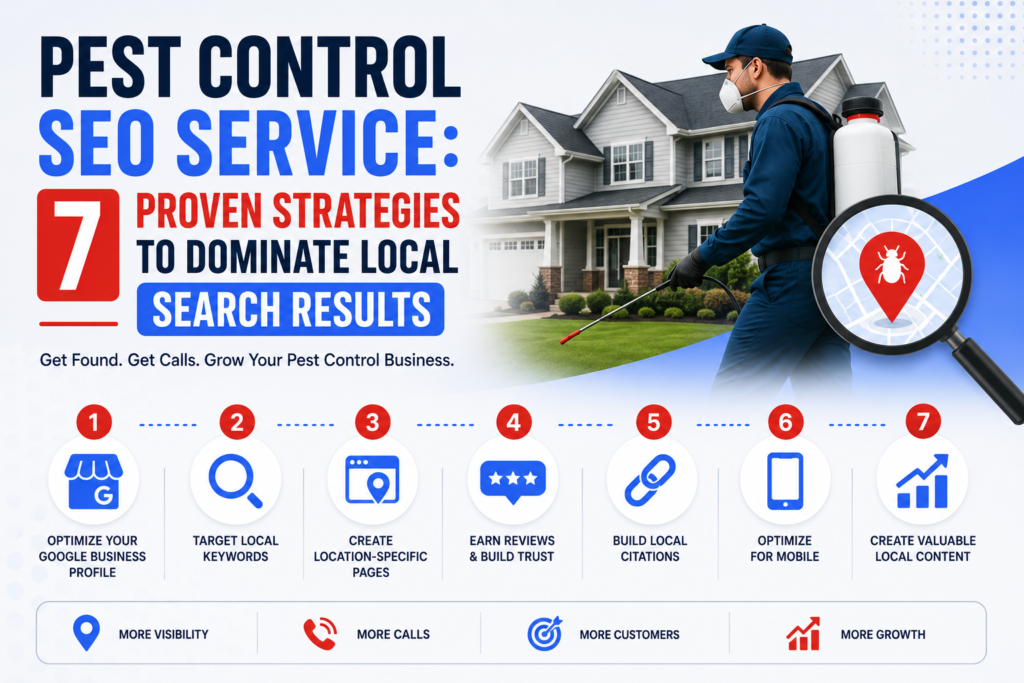
That’s exactly what a well-executed pest control SEO service solves. Below are seven proven, research-backed strategies that help pest control companies rank higher, get found faster, and convert more searches into booked jobs.
Why Pest Control SEO Service Matters in 2026
Pest control is one of the most urgency-driven, local-intent industries online. Searches like “exterminator near me,” “emergency pest control,” or “termite treatment cost” signal that the searcher wants help immediately — not a week from now.
The Rise of “Near Me” and Emergency Pest Searches
Most pest-related searches happen from a mobile device, often while the person is standing in their kitchen looking at the problem. These searches carry strong buying intent, which is why appearing in the local map pack and top organic results directly affects how many calls your business receives.
How Local SEO Directly Impacts Calls and Bookings
Unlike national SEO, pest control SEO is almost entirely local. Your competition isn’t a company three states away — it’s the exterminator two blocks from your customer. A strong local SEO service helps Google understand exactly where you operate, what services you offer, and why you’re the most trustworthy option in that specific area.

Strategy 1: Optimize Your Google Business Profile (GBP)
Your Google Business Profile is the single biggest factor in local pest control rankings. It’s what shows up in the map pack — the three listings most people click before anything else.
NAP Consistency (Name, Address, Phone)
Your business Name, Address, and Phone number must match exactly across your website, GBP, and every online directory. Even small inconsistencies (like “St.” vs “Street”) can confuse Google and weaken your local ranking signals.
Choosing the Right Primary and Secondary Categories
Avoid generic categories like “Home Services.” Instead, use precise categories such as Pest Control Service, Exterminator, or Wildlife Removal Service, and add relevant secondary categories for services like termite control, mosquito treatment, or rodent removal.
Adding Photos, Posts, and Service Area Details
Profiles with regular photo uploads, weekly posts, and clearly defined service areas consistently outperform static, incomplete profiles. Treat your GBP like a living page, not a one-time setup.

Strategy 2: Build Location-Specific Service Pages
A single generic “Pest Control” page can’t compete for multiple cities or neighborhoods. Search engines reward depth and specificity.
Why One “Pest Control” Page Isn’t Enough
If you serve five cities but only have one service page, you’re invisible in four of them. Each location needs its own dedicated page with unique content — not a copy-pasted template with the city name swapped out.
Structuring City and Neighborhood Landing Pages
An effective location page typically includes:
- A description of common local pests and seasonal patterns
- The specific services offered in that area
- Local testimonials or case references
- A map embed and clear directions
- A strong, visible call to action
Strategy 3: Target High-Intent Local Keywords
Keyword research is the foundation of any pest control SEO service. The goal is matching content to what real customers are typing into Google.
“Near Me” and Emergency Keywords
Phrases like “pest control near me,” “emergency exterminator,” and “same-day bed bug removal” show the highest buying intent and should be reflected in your titles, headers, and meta descriptions.
Service-Specific Terms
Break your keyword strategy down by pest and treatment type — termite inspection, rodent exclusion, cockroach extermination, mosquito control — since each has its own search volume and customer intent.

Strategy 4: Create Seasonal and Educational Content
Pest problems follow predictable seasonal patterns, and Google rewards businesses that publish timely, relevant content around them.
Spring, Summer, Fall, and Winter Pest Trends
Ants and termites spike in spring, mosquitoes and wasps dominate summer, rodents move indoors in fall, and winter brings indoor infestations. Publishing seasonal guides ahead of these spikes captures searchers exactly when they need help.
Answering “People Also Ask” Questions
Questions like “How much does termite treatment cost?” or “How do I know if I have bed bugs?” are real, high-volume searches pulled directly from Google’s own data. Structuring blog content around these questions — with clear, direct answers near the top — also improves your chances of being cited by AI search tools like ChatGPT, Perplexity, and Google AI Overviews, since these systems favor content that answers a question concisely before expanding on it.
Strategy 5: Generate and Manage Customer Reviews
Reviews are one of the strongest local ranking signals and a major trust factor for potential customers comparing providers.
Ethical Ways to Request Reviews
Personalize your request, send a short follow-up thank-you message, and include a direct link to your Google Business Profile to reduce friction.
Responding to Positive and Negative Feedback
Thank customers for positive reviews and respond to negative ones promptly and professionally. This shows both Google and future customers that your business is active and accountable.
Strategy 6: Strengthen Technical SEO and Core Web Vitals
In addition to improving site speed, regularly checking how Google crawls and indexes your pages is essential. Understanding Google Cached Pages can help identify indexing issues before they impact your search visibility.
Mobile-First Design for Urgent Searches
A slow-loading site during an urgent search means a lost customer. Prioritize fast load times, clear navigation, and prominent click-to-call buttons.
Site Speed, Schema Markup, and Structured Data
Implementing local business schema (structured data) helps search engines — and AI models — understand your services, service area, and reviews more precisely. This is a key part of Answer Engine Optimization (AEO), since structured, well-labeled data is easier for AI systems to extract and cite accurately.
Strategy 7: Build High-Quality Local Backlinks
Backlinks act as votes of confidence, signaling to Google that other credible sites trust your business.
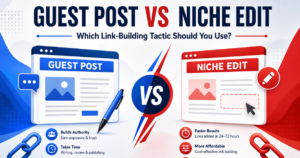
Guest Posting on Home Service and Local Blogs
Contribute genuinely useful content — seasonal pest prevention tips, eco-friendly treatment insights — to local news sites, home improvement blogs, and community publications.
Partnering with Real Estate and Property Management Sites
Property managers, HOAs, and real estate platforms are natural partners since pest control is directly relevant to property maintenance. Building these relationships earns relevant, high-value backlinks over time.
How Long Does Pest Control SEO Take to Show Results?
Most pest control businesses start seeing measurable improvements within 3 to 6 months, with stronger Google Maps rankings often taking a bit longer depending on local competition. SEO is a compounding investment — unlike paid ads, the visibility you build keeps generating calls long after the initial work is done.

Ready to Dominate Local Search? Let Alpha Tech Solution Handle Your Pest Control SEO
Implementing all seven strategies — Google Business Profile optimization, location pages, keyword targeting, content, reviews, technical SEO, and link building — takes consistent time and expertise. If you’d rather focus on running your business while experts handle the rankings, Alpha Tech Solution specializes in building complete, results-driven SEO systems for pest control companies.
FAQs
1. How much does pest control SEO cost?
Professional pest control SEO services typically range from $500 to $3,000+ per month, depending on your market’s competitiveness, service area size, and campaign scope.
2. What’s the difference between local SEO and general SEO?
General SEO targets a broad, often national audience, while local SEO focuses specifically on ranking within your service area — the geography where your actual customers live.
3. Can small pest control companies compete with big brands?
Yes. Local SEO often favors smaller, well-optimized businesses with strong reviews and location-specific content over larger competitors with weaker local signals.
4. Is pest control SEO worth it compared to paid ads?
SEO takes longer to show results but delivers compounding, long-term visibility, whereas paid ads stop generating leads the moment you stop paying for them. Most established pest control businesses use both together.